To make a real estate property website that generates leads in Canada, you need four things working together: a fast, mobile-first page built around a single property or neighbourhood, clear calls to action tied to a capture form, automated follow-up the moment someone submits their details, and local SEO signals that tell Google the page belongs to a specific Canadian market. Get those four right and the site works around the clock.
What should actually go on a property website page?
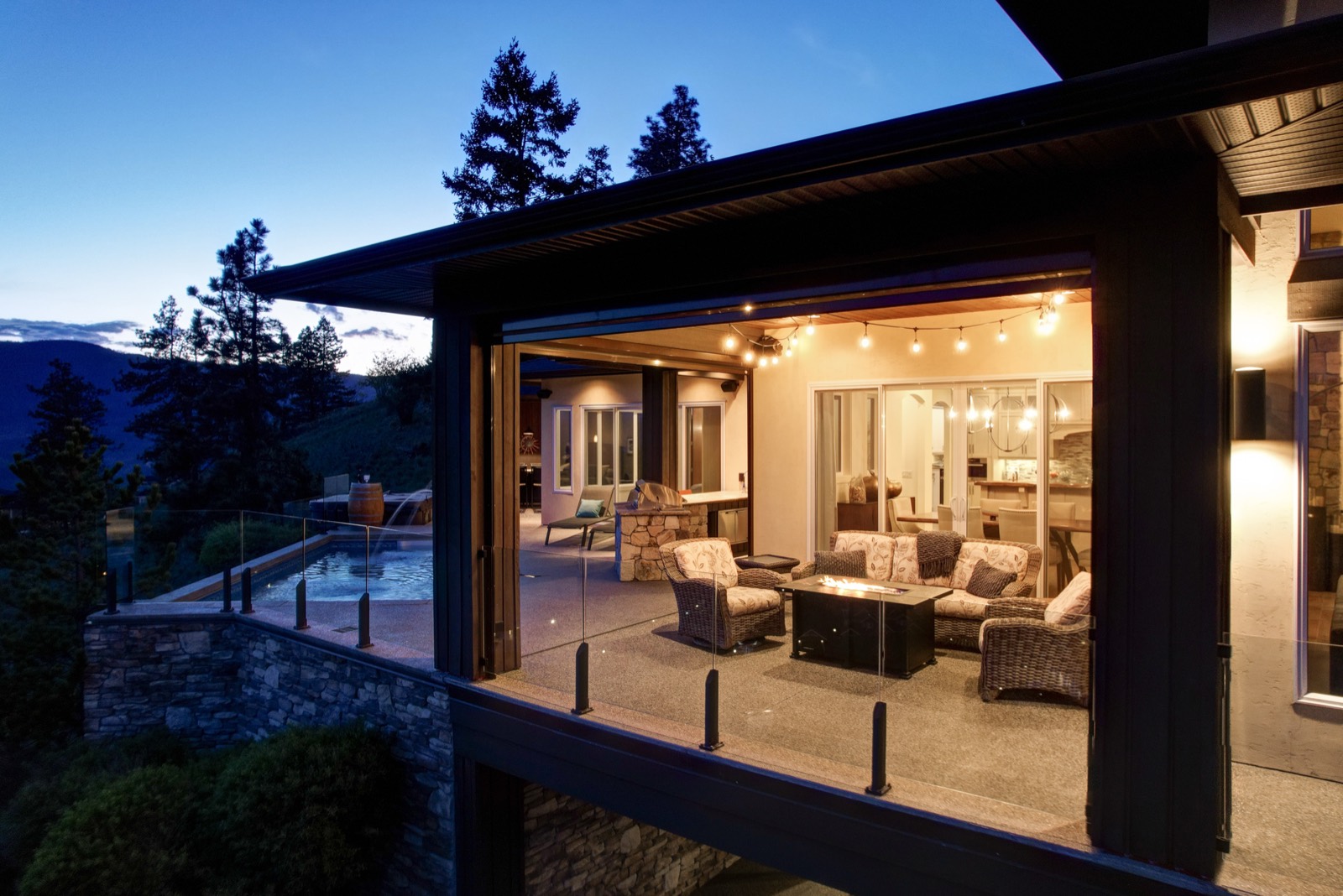
A high-converting property website page needs the following elements, in roughly this order: a full-width hero photo or gallery above the fold, the address and price front and centre, a short punchy description (not a wall of text), a prominent contact or showing-request form, key facts in scannable bullet points, a neighbourhood summary, and social proof such as your Google rating or recent sales nearby. Every element earns its place by moving a visitor closer to filling in the form.
- Hero gallery: lead with your strongest exterior or kitchen shot — it determines whether anyone scrolls
- Price and address: visible without scrolling on every device
- Showing-request form: short — name, email, preferred time — reduces friction
- Key facts strip: bedrooms, bathrooms, square footage, parking, lot size
- Neighbourhood paragraph: two or three sentences on walkability, schools, and transit
- Agent photo and contact info: builds trust and satisfies RECO and provincial advertising rules that require identifying your brokerage
Photo quality has an outsized effect on conversion. Blurry or poorly lit images signal an unmotivated seller and an inattentive agent. If you are handling photos yourself, our guide on AI listing photo rules every Canadian agent must know covers what is and is not permissible when you use AI enhancement tools.
How do you make a property website show up on Google in Canada?
To rank a Canadian property website on Google, the page title and meta description must include the full civic address and the city or municipality, the page must load in under three seconds on a mobile connection, and the domain or subdomain should already carry some age and backlinks — which is why single-property microsites on a throwaway domain rarely outrank an established agent website. Structured data markup (Schema.org's RealEstateListing type) helps Google understand the page without guessing.
Beyond the technical side, content depth matters. A page with only a photo gallery and a form gives Google almost nothing to index. Add a genuine neighbourhood description — transit lines, nearby parks, school catchment areas — and the page starts attracting searches beyond just the address. We go deep on what belongs in that section in our post on what to put on a neighbourhood page.
Local citations also help. Make sure your Google Business Profile lists the same brokerage name, address, and phone number that appears on the property page. Consistency across your profile and your site is a ranking signal that many agents overlook. Our guide on Google Business Profile setup for Canadian realtors walks through the exact fields to fill in.
How does the lead capture actually work once someone lands on the page?
Lead capture on a property website works when a short form is paired with an immediate automated response — ideally an SMS or email confirmation sent within two minutes of submission. Research consistently shows that response speed is the single biggest predictor of whether an inquiry converts to a conversation. A form that emails you a PDF at the end of the day and waits for you to reply manually loses most leads to a competitor who responded first.
The form itself should ask for as little as possible: name, email address, and one qualifying question such as preferred showing time or whether the visitor is already working with an agent. Every additional field you add reduces completions. If you want more information, get it on the phone after the first response.
The automated follow-up message should feel personal, not canned. Something like "Hi [name], thanks for reaching out about [address] — I'd love to book a showing. Are mornings or evenings better for you?" keeps the tone conversational. If you are using Qlarify's SAM Chat, the AI handles that first response on your behalf, qualifies the lead with a short conversation, and flags hot prospects for you to call — so no inquiry sits unanswered even when you are at a listing appointment.
Should you build a separate site for every listing, or use one agent website?
For most Canadian agents, a dedicated section within a single established agent website outperforms a standalone microsite for each listing. A single domain accumulates authority over time, every new property page inherits that authority, and buyers who browse multiple listings stay on your site rather than bouncing across different domains. Standalone microsites make sense mainly for luxury or acreage properties where the marketing budget justifies a custom domain and a longer campaign life.
The practical argument for one consolidated site is even stronger when you factor in maintenance. Registering, hosting, and eventually letting expire a new domain for every listing creates administrative noise. It also means your SEO work on one property does nothing for the next one. A well-structured agent website with clean URL slugs — such as yourname.ca/listings/123-elm-street-toronto — compounds value listing by listing.
Qlarify's website platform is built around exactly this model: each listing gets its own indexed page inside your branded site, with built-in capture forms, mobile-optimized galleries, and neighbourhood content blocks. You do not need to hire a developer or manage a separate CMS for property pages.
What converts better — a virtual tour or a strong written description?
Strong written descriptions consistently outperform virtual tours as lead-capture tools, because a buyer who reads a description has already started imagining life in the home — which is a much warmer mental state than someone clicking through a 360-degree tour for novelty. Virtual tours reduce unnecessary showings, which helps sellers, but they do not reliably increase form submissions. Use both, but invest more effort in copy than in technology.
The description should be specific about what makes the property worth seeing: "The kitchen renovation used the full 2024 permit, so the buyer's home inspector will have no surprises" is more credible than a generic reference to a modern kitchen. Concrete details signal that you know the property and that you are honest about it. For a full breakdown of how to structure listing copy, see our guide on how to write listing descriptions that sell.
One practical tip: write the description before the photos arrive. When you write first, you identify the story the photos need to tell. When you write after, you tend to describe what you see rather than what a buyer should feel.
Tying the pieces together
A property website that generates leads in Canada is not a single tactic — it is a short stack of interdependent decisions: quality photos, fast load time, a short form, an instant automated response, enough written content for Google to understand the page, and a domain that builds authority over time. None of those pieces is complicated on its own. The agents who consistently generate leads online are simply the ones who have all five working at the same time, on every listing.
If you want to see how this looks in practice before building anything yourself, our property website platform includes templates optimized for the Canadian market, with SAM Chat and your CRM connected by default — so the lead pathway from first visit to booked showing requires almost no manual work on your end.